
"Western China"
2000 article(s) found

Comparison of Tea and Coffee the ratio of Chinese Tea and Western Coffee Culture
Tea, coffee and cola are called the three largest drinks in the world, and the largest consumption is tea and coffee. Coffee plays an irreplaceable role in the life of westerners, no matter in school, company, shopping mall or at home, everyone enjoys it with a coffee cup, while tea is deeply rooted in Chinese life, it is not only a kind of drink, but also carries Chinese culture. Tea and coffee represent

Alice Cafe Business Plan, Alice Cafe Investment Plan
Pay close attention to the coffee review (Weixin Official Accounts vdailycom ) and find that the beautiful cafe opens its own small shop. In China, most consumers regard eating western food as a luxury. Soft lighting, elegant decoration, exquisite tableware, polite waiters in many people's eyes is a remote embodiment of aristocratic consumption, is irrelevant to millions of ordinary people.

Coffee introduced into China and Chinese Coffee Culture
There are several meanings to say that coffee was introduced into China: first, coffee was introduced into China and was initially consumed by European and American people who came to China; second, there were commercial cafes where ordinary people, Chinese and foreign people could drink and entertain themselves; and third, coffee was cultivated in the field in China, produced and sold for its own use.

The collision between Oriental Tea Culture and Western Coffee Culture
The spread of tea to Europe and the introduction of coffee into China are regarded as a major event of spreading civilization. although coffee has not yet become a popular drink in China, tea has become a part of the quality of life and enjoyment of Europeans. People with gentleman cultivation or noble taste pay much attention to drinking tea, and the leisurely afternoon tea every day is reminiscent of the philosophy and literary atmosphere in the salon. But it's early.
How far is China from being a big coffee consumer? China Coffee Trading Network
In Fushan, a small town in the western corner of Hainan, fragrant cafes are full all the year round, and local residents consume more than 200 cups of coffee per capita each year. This astonishing consumption impressed coffee suppliers from all over the world who came here to participate in the International barista Championship. Chinese people began to be interested in coffee culture, which made me see the huge market potential. Ethiopia

Chinese people fall in love with coffee foreign coffee chains are growing rapidly in China
The picture of a Starbucks store in China comes from a report by foreign media on December 30 that many foreign brands and business models from Best Buy to B & Q have encountered a Waterloo in China. However, the Western retail concept of foreign coffee shops, which was perhaps the least likely to succeed, has flourished in China. According to a report on the Financial Times website on December 29,

Coffee Culture the collision between Oriental Tea Culture and Western Coffee Culture
The spread of tea to Europe and the introduction of coffee into China are regarded as a major event of spreading civilization. although coffee has not yet become a popular drink in China, tea has become a part of the quality of life and enjoyment of Europeans. People with gentleman cultivation or noble taste pay much attention to drinking tea, and the leisurely afternoon tea every day is reminiscent of the philosophy and literary atmosphere in the salon. But it's early.

Fancy Coffee making skills Hua Diao Mocha Coffee
In the history of coffee, there is no shortage of coffee drinks mixed with western wine, but Chinese wine combined with western-style coffee, and officially launched for the market, is still the first in the industry: daughter red coffee? What kind of taste is this? Or, in the bookstore with a strong flavor of Chinese traditional culture, the smell of scholarly coffee, time travel, the combination of Chinese and Western, delicious more wonderful. Pacific Coffee (Pacific Coffee)

Flower full moon-flower carving mocha coffee
In the history of coffee, there is no shortage of coffee drinks mixed with western wine, but Chinese wine combined with western-style coffee, and officially launched for the market, is still the first in the industry: daughter red coffee? What kind of taste is this? Or, in the bookstore with a strong flavor of Chinese traditional culture, the smell of scholarly coffee, time travel, the combination of Chinese and Western, delicious more wonderful. Pacific Coffee (Pacific Coffee)

The origin of coffee and when was it introduced into China?
The word coffee comes from the Greek word Kaweh, which means strength and enthusiasm. Coffee tree is an evergreen shrub of Capsaceae. Daily coffee is made from coffee beans combined with a variety of cooking utensils, and coffee beans refer to the nuts in the fruit of coffee trees, which are then roasted with appropriate roasting methods. In ancient China, Shennong tasted all kinds of herbs and recorded them one by one.

How far is China from being a big coffee consumer?
In Fushan, a small town in the western corner of Hainan, fragrant cafes are full all the year round, and local residents consume more than 200 cups of coffee per capita each year. This astonishing consumption impressed coffee suppliers from all over the world who came here to participate in the International barista Championship. Chinese people began to be interested in coffee culture, which made me see the huge market potential. Ethiopian federal democracy

Coffee Industry develops Coffee Market consumption in China reaches 300 billion yuan
Wang Caihua, a senior research and management expert in China's coffee industry and deputy director of the coffee shop standardization promotion and management committee, said: according to relevant industry data, China's coffee market will continue to expand. China's coffee market will enter a period of rapid growth in the next 10 years, and its consumption is expected to reach 300 billion yuan by 2020. Wang Caihua believes that China's strong economy is real.

Common sense of blending delicious fancy Coffee with famous Chinese Wine
In the history of coffee, there is no shortage of coffee drinks mixed with western wine, but Chinese wine combined with western-style coffee, and officially launched for the market, is still the first in the industry: daughter red coffee? What kind of taste is this? Or, in the bookstore with a strong flavor of Chinese traditional culture, the smell of scholarly coffee, time travel, the combination of Chinese and Western, delicious more wonderful. Information Times reporter Li Xinghui and Wu Wei

How far is China's coffee market from a big coffee consumer?
In Fushan, a small town in the western corner of Hainan, fragrant cafes are full all the year round, and local residents consume more than 200 cups of coffee per capita each year. This astonishing consumption impressed coffee suppliers from all over the world who came here to participate in the International barista Championship. Chinese people began to be interested in coffee culture, which made me see the huge market potential. Ethiopian federal democracy
Coffee common sense how far is China from a big coffee consumer?
In Fushan, a small town in the western corner of Hainan, fragrant cafes are full all the year round, and local residents consume more than 200 cups of coffee per capita each year. This astonishing consumption impressed coffee suppliers from all over the world who came here to participate in the International barista Championship. Chinese people began to be interested in coffee culture, which made me see the huge market potential. Ethiopian federal democracy
When coffee enters tea country
As the saying goes, what you eat is what you eat. (You are what you eat.) You can also say that You are what you drink. The drink of a person or even a nation will soak the character of that person or nation. If tea is the drink of the East, coffee is the drink of the West.

How far is the coffee market from China to a big coffee consumer?
In Fushan, a small town in the western corner of Hainan, fragrant cafes are full all the year round, and local residents consume more than 200 cups of coffee per capita each year. This astonishing consumption impressed coffee suppliers from all over the world who came here to participate in the International barista Championship. Chinese people began to be interested in coffee culture, which made me see the huge market potential. Ethiopian federal democracy
Chinese people drink coffee China Coffee Network Coffee introduced into China Coffee Trading Network
Coffee was introduced into China from the perspective of language, the Kangxi Dictionary has neither the word caf é, nor the word coffee, let alone the word coffee, which shows that the Chinese people in the early Qing Dynasty were not exposed to coffee. Whether there is any coffee (beverage) in China in the middle of the Qing Dynasty is still under search. The author carefully examines several characters from the middle to the end of the Qing Dynasty in the Integration of colloquial dictionaries of the Ming and Qing dynasties published by Shanghai Ancient Books Publishing House in 1989.
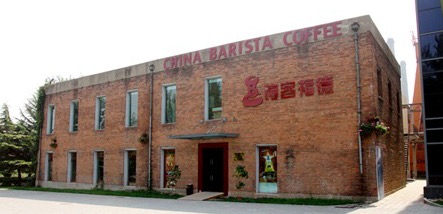
The first Western Branch of CBC International Coffee training Institute settled in Jincheng
Drinking coffee, making pastries and tasting red wine, do you yearn for this kind of life full of style? If so, you must come to a place located in Lanzhou Creative Culture Industry Park, Duanjiatan Road, Lanzhou City. As a key supporting enterprise of Lanzhou Creative Culture Industry Park, Gansu Sanyizhuangchuang Space Culture Communication Co., Ltd. joined hands with Beijing CBC.

Foreign coffee chains are growing rapidly in China and are becoming diversified.
According to the Financial Times, many foreign brands and business models have met their Waterloo in China, from Best Buy to BQ. However, the Western retail concept of foreign coffee shops, which was perhaps the least likely to succeed, has flourished in China. Although China has a history of drinking tea for thousands of years, coffee chains from the United States, Britain and South Korea